Beyond Green: Incorporating Eco-Friendly Practices in Your Landscape Design Feb 13, 2026
The journey towards an eco-friendly landscape begins with understanding the unique characteristics of your environment. It's important to assess your soil and climate conditions, as this knowledge will guide the selection of plants and materials suited to your area. Plants that are native to your region are naturally adapted to local conditions, requiring less water and maintenance, and are more resistant to pests and diseases. Native plants not only add beauty to your landscape but also support local wildlife by providing habitats and food sources for pollinators like bees and butterflies.
Water management is a crucial component of sustainable landscape design. Techniques such as rainwater harvesting and the installation of drip irrigation systems can significantly reduce water consumption. Consider incorporating permeable surfaces like gravel, permeable pavers, or ground covers that allow rainwater to seep into the ground, replenishing groundwater supplies instead of contributing to runoff. Planting shade trees can help conserve water by reducing evaporation and providing natural cooling.
Eco-friendly landscaping also focuses on reducing the carbon footprint of your outdoor space. One effective way to achieve this is by choosing organic fertilizers and compost instead of chemical ones. Organic fertilizers improve soil health over time, promoting robust plant growth without the harmful side effects of chemical fertilizers. Composting yard waste and kitchen scraps not only reduces landfill waste but also enriches your garden soil, creating a healthy foundation for plant growth.
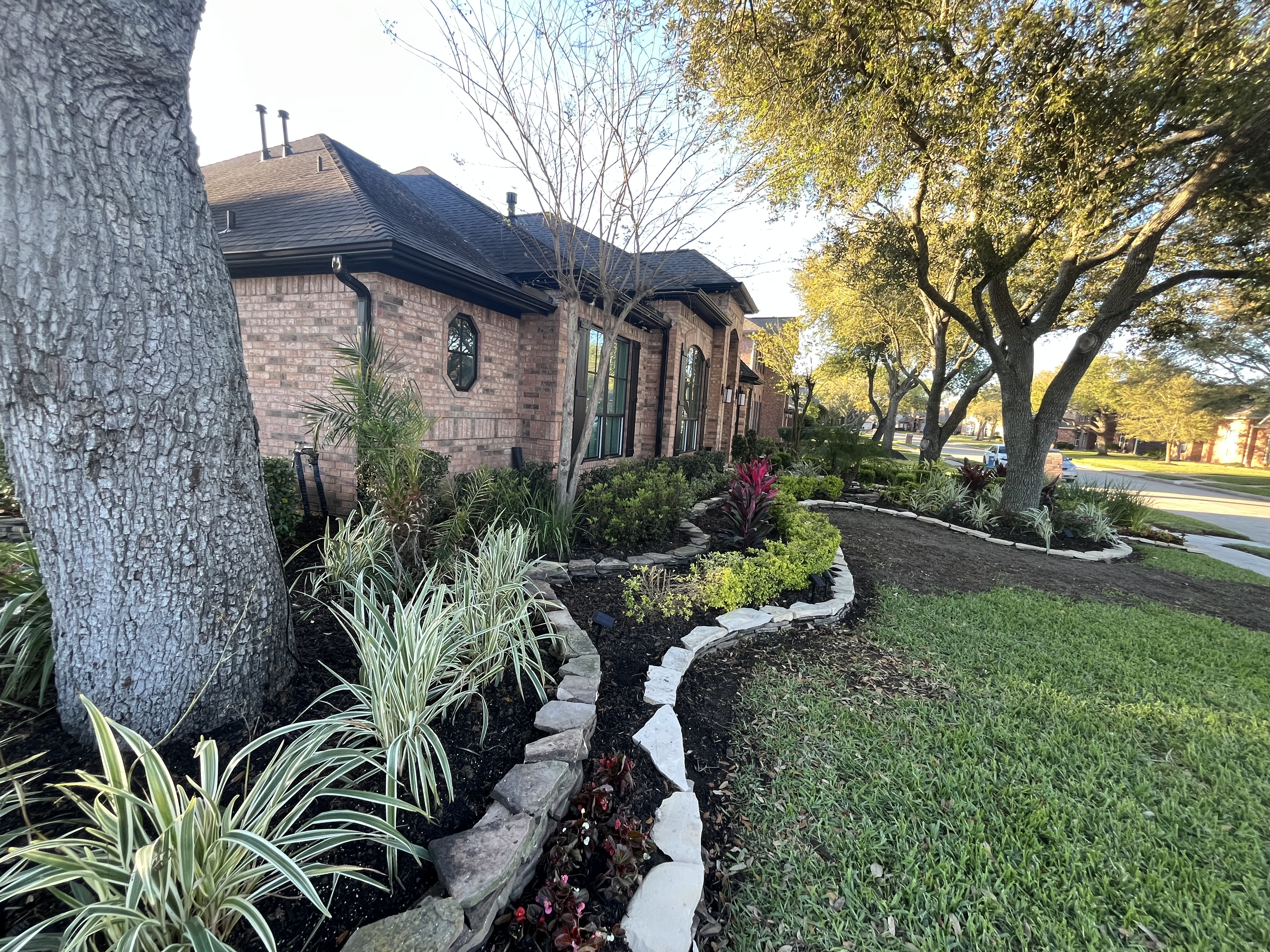
Incorporating hardscaping elements like stone pathways, patios, and retaining walls can add structure and visual interest to your landscape while being environmentally responsible. Opt for locally sourced, recycled, or sustainable materials to reduce transportation emissions and resource depletion. Hardscaping also provides opportunities to reduce lawn areas, which cuts down on water usage and maintenance efforts.
Lighting your landscape efficiently is another aspect where you can adopt eco-friendly practices. Use LED lights or solar-powered lights to illuminate pathways and garden areas. These options consume less energy and have a longer lifespan compared to traditional lighting. Installing motion sensors or timers ensures that lights are used only when needed, further conserving energy.
At Garza Lawncare & Tree Service, we encourage our clients to consider the long-term benefits of an eco-friendly landscape. Although the initial investment might be higher, sustainable landscapes often require less upkeep, resulting in reduced costs and labor over time. Moreover, they increase property values and contribute to a healthier environment, proving that going green is a wise choice for both your wallet and the Earth.
In conclusion, transitioning to an eco-friendly landscape design is not only an environmentally responsible choice but also a practical one. By following these sustainable practices, you not only create a beautiful, manageable landscape but also play a part in preserving the environment for future generations. Let Garza Lawncare & Tree Service guide you in making the best choices for your landscape. Together, we can cultivate a vibrant, sustainable outdoor area that you can enjoy season after season.
/filters:no_upscale()/filters:format(webp)/media/7388e30a-ace4-4807-a860-24696ab87b67.jpeg)